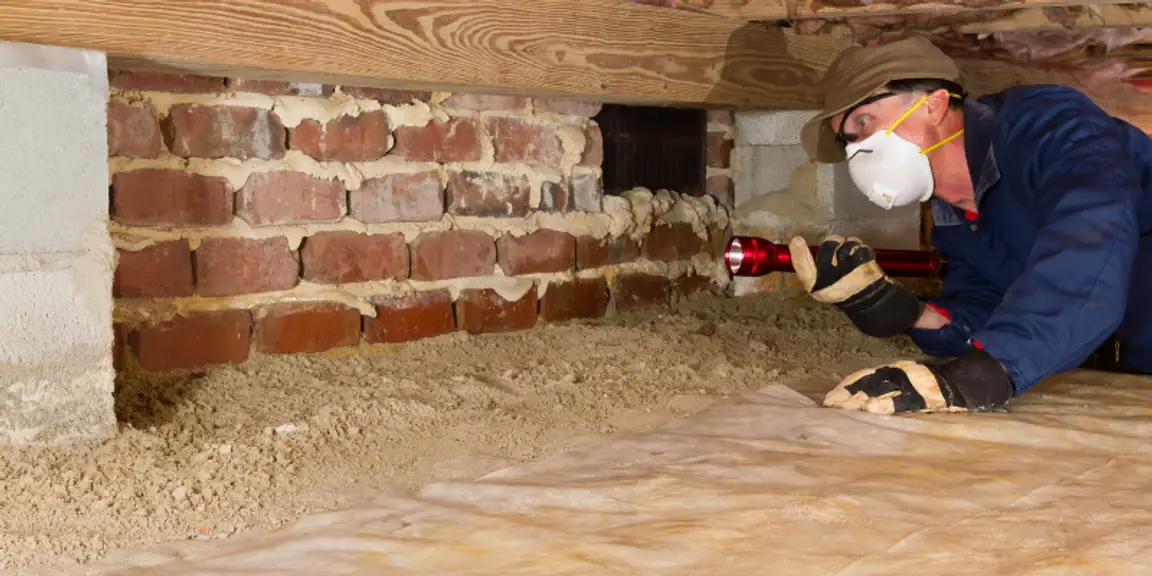


A little pile of what looks like coffee grounds on a windowsill doesn’t seem like much. Sweep it up, and a week later it’s back. Those pellets are droppings from drywood termites living inside the wood, and they’re the main reason a Texas homeowner ends up pricing termite tenting. Before you sign a fumigation contract, find out which termite you’re fighting and what the job should cost here.
What Is Termite Tenting and When Do Texas Homes Need It?
Picture the whole house wrapped in tarps like a circus tent. Under that cover, a crew releases a gas that works its way into every board, then airs the house out before anyone moves back in. Termite tenting is built for termites that live in the wood itself.
Why does that matter in Texas? Most of the termite trouble here comes from subterranean termites, which live in the soil and travel up through mud tubes. Texas A&M’s urban entomology program lists native subterranean termites and Formosan termites as the two major types found in the state. Those are usually handled with soil treatments or bait, not a tent.
Drywood termites are different. According to Texas A&M, they’re found throughout Texas, with the heaviest concentrations along the Gulf Coast, and they nest in sound, dry wood above the ground. Because they never touch the soil, a perimeter treatment can’t reach them. That’s when termite tenting earns its price.
Telling the two apart isn’t hard once you know the signs. Subterranean termites leave pencil-width mud tubes on slab edges and walls. Drywood termites leave piles of tiny, hard pellets below kick-out holes in trim, window frames and furniture. Both send out winged swarmers, so a few wings on a sill only tell you termites are around, not which kind.
How Much Does Termite Tenting Cost in Texas?
Plan for a few thousand dollars on a typical house. Angi’s 2026 termite tenting cost guide puts the national average at $3,000, with most jobs running from $2,000 to $5,000. Pricing runs about $1 to $4 per square foot, so a bigger house moves the number fast.
At those per-foot rates, a 2,000-square-foot house could come in anywhere from two thousand to eight thousand dollars before add-ons. Have the company show the measurement it priced from. A quote built on the wrong square footage is the easiest way to overpay.
This Old House’s termite treatment cost guide, updated in June 2026, gives fumigation a range of $1,500 to $5,000. The two sources don’t line up perfectly, and Texas bids won’t either. Get at least two written quotes that spell out the square footage, the fumigant and what happens if termites show up again.
Ask whether the price includes the follow-up inspection and any warranty. Some companies bundle a year of coverage into the termite tenting price. Others charge for it separately, which makes the cheaper bid look better than it is.
What Pushes the Price of a Tent Fumigation Up or Down?
Size comes first in any termite tenting quote. More square footage and more cubic volume mean more tarps, more gas and longer exposure times. Angi lists the home’s size, how severe the infestation is and the type of treatment as the main drivers.
Tight access adds cost as well. A detached garage, an addition with its own roofline or a house built close to a fence line can mean extra sealing work. Severe infestations may call for more fumigant and a longer exposure, which shows up on the invoice.
In my experience, Texas pest companies are easier to schedule and more flexible on price outside of spring swarm season. If the colony isn’t spreading fast, there’s no harm in collecting two bids and comparing them side by side before you commit.
I looked at a house in Grand Prairie where the seller already had a fumigation quote in hand. Our inspector pulled back the baseboard in the hall bath and found mud tubes, not pellets. Those were subterranean termites, so the tent quote was the wrong fix for that house, and a soil treatment handled it for less.
That’s the first question I’d ask any pest company: which termite is it, and how do you know?
What Are the Cheaper Alternatives to Termite Tenting?
Some infestations don’t call for a tent at all. For subterranean termites, most Texas pest companies use liquid soil treatments and bait systems. This Old House puts bait systems at $400 to $3,000 and spray treatments at $150 to $1,500.
For a small, contained drywood colony, spot treatment can work. The company drills into the infested wood and injects a product directly, which the same guide prices at $350 to $1,000. It only works when the pest company can find every colony, and that’s hard to promise in walls and attics.
Heat treatment is the other whole-structure option, running $1,300 to $2,500. It raises the temperature inside the wood until the termites die, with no gas involved. Results suffer in spots where heat can’t build up, like slab edges or thick beams.
Whatever the treatment, the Texas Department of Agriculture licenses the companies that apply it. The same license lookup works for a bait system as for a fumigation.
Termite tenting stays the most thorough choice for a widespread drywood problem. Spending less on a partial fix that has to be redone isn’t saving money.
What Texas Rules Apply During a Tent Fumigation?

Termite tenting is tightly regulated here. Under Texas rule 4 TAC 7.178, a certified applicator licensed in structural fumigation has to be on site when the gas goes in. The applicator also has to be there for the first round of airing out and when the house is released. Everyone has to be out before fumigation starts.
That rule also requires the company to notify local fire, police or emergency authorities before the fumigant is introduced. Red-on-white warning signs with a skull and crossbones go up around the house and stay up until it’s safe. If no applicator is present, a guard checks the property every hour until the gas drops to the release level.
Separately, the company has to report the job to the Texas Department of Agriculture’s Structural Pest Control Service 4 to 24 hours ahead. After clearance, the crew leaves a small sticker near the breaker box, water heater or kitchen sink showing the house was fumigated.
Keep the job paperwork, because any future buyer will ask for it.
None of these steps is optional, and they protect you. A company that skips the notice or the warning signs is cutting corners on the most dangerous part of the job. Before you sign, get the applicator’s license number and look it up with the Texas Department of Agriculture.
How Should You Prepare and Budget for the Days Out?

Angi says to plan on two to three days away from home. Pets go with you, including fish tanks and birds. Give the company a phone number where it can reach you day or night, and ask a neighbor to keep an eye on the tarps if a storm rolls through. Hotel nights run $100 to $200 apiece on Angi’s fumigation estimate, and that’s money people forget to add to the termite tenting budget.
Your fumigation company will hand you a prep sheet, and it’s worth following line by line. Food, medicine and pet food either leave the house or go into special sealed bags. Plants near the foundation get moved or watered heavily, and gas service may need to be shut off.
Walk the roof and the yard with the crew lead beforehand. Tarps get dragged across shingles and flower beds, and it’s easier to agree on what’s already damaged before the job than after. One more thing from experience: clear the attic access, because the crew may need it.
Once the house is cleared, open the windows for a while, run the HVAC fan and wipe down the counters where you’ll make food. Find out when the company will come back for its follow-up inspection, and put that date on the calendar.
How Does Termite Tenting Affect Selling a Texas Home?
Texas sellers have to talk about termites. The seller’s disclosure required by Section 5.008 of the Texas Property Code asks about active termites and termite or wood rot damage needing repair. It also asks about previous termite damage and previous treatment. A completed tent fumigation goes on that form along with the paperwork.
Buyers using a loan will usually order a wood destroying insect inspection anyway. Showing them the fumigation report, the clearance date and a transferable warranty turns a scary word into a solved problem.
How old the treatment is matters to buyers too. A fumigation from years back with no warranty still in force reads like an open question. Getting a fresh wood destroying insect inspection before you list can head off a renegotiation after the buyer’s inspector finds old damage.
Buyers have more options this year, so timing counts. The Texas REALTORS third-quarter 2026 report showed active listings up 2.8% statewide from a year earlier, inventory at 5.5 months and a median price of $333,628. With that much to choose from, a house with untreated termites gets passed over or gets a lowball offer.
Should You Tent the House Before Selling in Texas or Sell As Is?
Fumigating first makes sense if the infestation is confined to drywood termites, the structure is sound and you’ll be listing with an agent. Clean reports and a warranty help the house compete.
Selling as is fits better when termites have chewed through framing or the repair estimate keeps growing. It also spares you a fumigation followed by weeks of showings, which matters most on an inherited house or a rental nobody lives in. House Buying Girls buys houses with active termites and old damage, and we handle the treatment ourselves after closing.
A seller in Denton called us about a two-story with drywood pellets on every upstairs windowsill and soft trim around the back porch. She’d gotten one termite tenting bid and a separate carpentry bid and didn’t want to manage both. We bought the house as it stood and scheduled the fumigation after we closed.
If you’re in Dallas, Fort Worth or a nearby city, you can sell your house for cash in Dallas and skip the fumigation schedule altogether.
Termite Tenting Questions Texas Homeowners Ask

Is termite tenting worth the money?
For a widespread drywood infestation, yes. It reaches colonies hiding inside walls that spot treatments miss. For subterranean termites, a soil treatment or bait system is usually the better buy.
Does homeowners insurance pay for termite tenting?
Almost never. Standard Texas homeowners policies treat termites as a maintenance issue, so both the damage and the treatment come out of your pocket. Read your policy to be sure.
Do termites come back after tenting?
The gas kills the termites inside the house but leaves nothing behind to stop new ones. Yearly inspections, a warranty and fixing moisture problems keep a fresh colony from moving in.
How long does termite tenting take from start to finish?
Most jobs take a few days from tarping to clearance, depending on the size of the house and the fumigant’s label. The crew won’t release the house until a calibrated test shows it’s safe to go back in.
Can I stay in the house during termite tenting in Texas?
No. State rules require everyone to be out before the fumigant goes in, and you can’t return until the crew signs off on clearance.
Can I sell my house right after a termite fumigation?
Yes. Hand buyers the fumigation report, the clearance paperwork and any warranty, and list the treatment on your disclosure. Those records usually settle the question.
Termites don’t have to stall your plans. Rather skip the tent, the prep and the repairs? Reach out to House Buying Girls or call (214) 393-8026 for a no-obligation cash offer on the house as it sits.