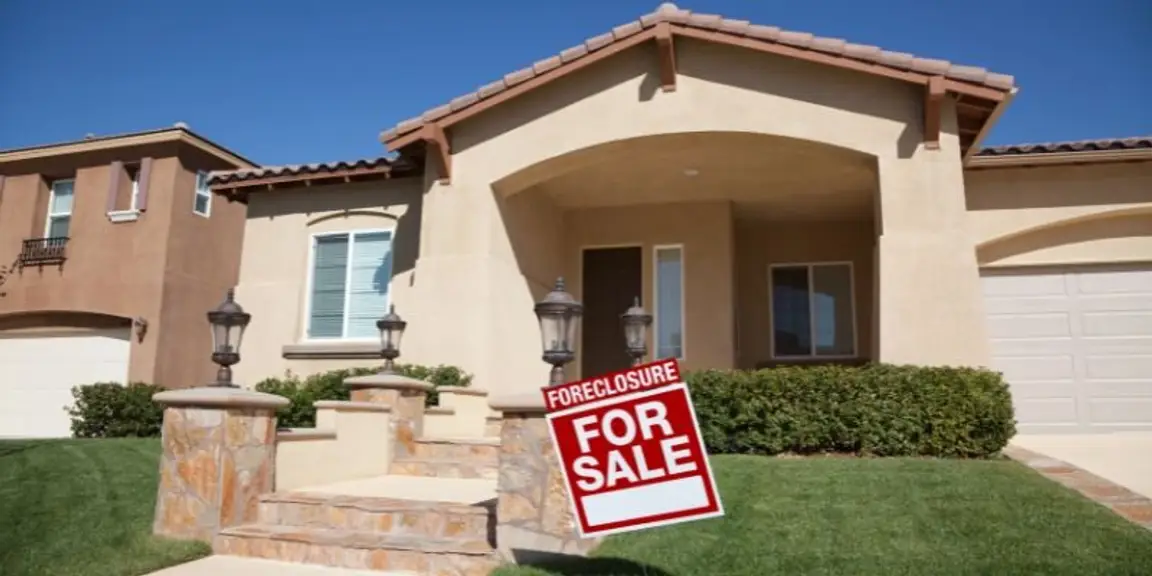


If your mortgage payment feels less like a monthly commitment and more like a mountain, you’re not alone. Every year, thousands of Texas homeowners find themselves in this identical position, trying to find a route out that won’t ruin their financial future.
I’ve been buying houses all throughout Texas for over a decade, with we buy houses in Texas, from the oil corridors of Houston to the tech boom in Austin, from the expansive suburbs of Dallas-Fort Worth to the River Walk enclaves in San Antonio. Texas is a state of contrasts. I’ve watched families across the Lone Star State face severe housing choices.
Short Sale vs Foreclosure in Texas: Complete Homeowner’s Guide

A short sale is more than simply paperwork. The short sale vs. foreclosure. It’s the difference between having some control over your situation and seeing it get totally out of control.
Texas had 28,946 foreclosure starts in 2024, the third-highest in the nation for foreclosure activity. But here’s what most folks don’t know: many of those could have been avoided with a short sale.
In a foreclosure, you lose your home. End of story. They decide how much it sells for, when it sells, and how it sells. There’s no money in it for you, and your credit is shot for years.
But a short sale is another beast. You sell your home for less than what you owe on the mortgage, but the lender agrees to take the sale proceeds as full payment. You’re in the driver’s seat. You work with a real estate agent, and you limit the damage to your credit score.
Here’s how to think about it: Foreclosure is like a bankruptcy for your house. A short sale is like paying off a debt.
Pre-foreclosure Options for Texas Homeowners Facing Financial Hardship
Texas law provides you some room to breathe before you even think about a short sale or let foreclosure proceedings start. You have 20 days from the date you get the notice of default to restart your loan by paying the amount past due.
That may feel impossible if you’re already struggling. But this is also a period when families may discover emergency finances, receive assistance from family members, or work out a payment plan with their lender.
Other pre-foreclosure alternatives are the following:
Loan modification: Your lender can agree to alter the conditions of your loan, cut your interest rate, or prolong the loan term to lower your monthly payments.
Forbearance: A temporary halt or reduction in payments until you get back on your feet.
Deed in lieu of foreclosure: You voluntarily transfer ownership of your home to the lender without going through the foreclosure procedure.
“I’ve seen homeowners in places like Katy and The Woodlands negotiate changes that saved their homes.” But seriously? Most lenders are not going to tell you about these possibilities unless you ask them.
Texas Homestead Exemption Laws and Foreclosure Protection Rights
Texas has some of the greatest safeguards in the country for homeowners facing foreclosure, thanks to the state’s homestead laws. The Texas Constitution provides specific protection for your principal home.
In practice, this means that if you have equity in your property over your mortgage obligation, the Texas homestead exemption protects that from most creditors. They can’t force you to sell your home to settle credit card debt, medical costs, or other unsecured loans.
But homestead protection isn’t going to stop a foreclosure if you can’t make your mortgage payments. Mortgage lenders have a lien on your land that takes precedence over homestead protection.
But these regulations do affect what happens after foreclosure. Texas is primarily a non-recourse state for purchase money loans on primary properties, which means that lenders usually cannot seek deficiency judgments against homeowners after foreclosures.
Texas is unique from many other states because of this safeguard, as explained in Can You Sell A House With Tenants In Texas. In foreclosure, if your house sells for less than you owe, the lender normally can’t come after you for the difference.
Judicial vs Non-judicial Foreclosure Procedures in Texas
Texas is a non-judicial foreclosure state—lenders don’t have to use the court system to take your house. This makes it faster but also makes you have less chances to contest it.
Once you are 3 months behind on payments, most lenders can start the foreclosure procedure. In Texas, the lender must mail you a letter of demand saying you have 20 days to pay the delinquent sums or they will start the foreclosure process.
The lender may then set a date for a foreclosure sale after the 20 days. The servicer must send to the borrower a Notice of Sale, which must contain the date of the sale and the earliest time of sale, at least 21 days before the sale.
In Texas, the entire process from the first missed payment to the foreclosure auction might be as little as 4 months. That’s one of the fastest timetables in the country.
Texas does permit judicial foreclosure, but it is seldom used. The lender must sue and get a court judgment before it can proceed with the transaction. It just takes longer and provides homeowners with more options to fight the foreclosure.
Texas Foreclosure Laws and Timeline Requirements for Distressed Properties
Texas also has one of the quickest average foreclosure timeframes at 147 days. Compare that to states like Louisiana or Hawaii, where it can take years.
The rapid pace of Texas foreclosures increases urgency for homeowners in financial distress. You don’t have years to work it out. You have weeks.
Here’s how the Texas foreclosure process works:
Months 1-3: Miss mortgage payments. Lender sends alerts and tries to contact you.
Month 4: Lender sends Notice of Default. You have 20 days to cure the default.
Month 5: If you don’t remedy the default, the lender arranges a foreclosure sale with 21 days’ notice.
Month 6: You show up at the county courthouse for the foreclosure sale on the first Tuesday of the month.
This schedule implies you do not take any action to delay or halt the procedure. Working with companies such as House Buying Girls can allow you to explore alternatives before the foreclosure sale date. If you want a clearer breakdown, here’s how our process works from consultation to closing.
How Short Sales Work in Texas Real Estate Market Conditions
The statewide median home price of $340,000 was unchanged from the same quarter last year, although market conditions vary drastically across Texas.
If you have equity in your house, you may not have to short-sale in hot areas like Austin (typical sales price $440,000 as of April 2026) or some Houston neighborhoods. But in markets where home prices are falling or flat, short sales come into play.
On average, homes in Texas sat on the market for seven days longer in Q3 2024 compared to the same period last year, with months of inventory reaching 4.8 statewide. That transition to a more balanced market really supports the short sale talks.
If inventory is larger and homes take longer to sell rather than go into foreclosure, lenders are more likely to accept short sale offers. They realize that foreclosed properties sometimes languish on the market much longer and come with more maintenance and marketing expenses.
Regional distinctions are absolutely critical. A short sale in Midland may not be the same as one in Plano, and in some cases, homeowners in nearby markets like Fort Worth turn to cash home buyers in Fort Worth when timing becomes critical.
Short Sale Process Timeline and Requirements in Texas Counties

A short sale might take anywhere from 3-6 months to complete from beginning to end if you have all your paperwork together and can locate a suitable buyer promptly.
Here is the regular schedule:
Weeks 1-2: Begin collecting numerous documents for your lender, including a hardship letter describing your financial circumstances, evidence of income and assets, recent tax returns, bank statements, and a comparative market analysis detailing your home’s current value.
Week 3-4: Submit short sale package to lender’s loss mitigation department.
Month 2-3: The lender considers your request, which might take a few weeks to a few months to determine your financial hardship and the worth of your house.
Month 3-4: Get approved, list your home, and start promoting.
Months 4-6: Negotiate with buyers, submit an offer to the lender for approval, and conclude the sale.
Texas: Short sale documentation requirements vary slightly from county to county. Harris County (Houston) processes tend to be more difficult due to volume, although smaller counties like Williamson or Collin can move faster.
The trick is to start early. Don’t wait until you are three months behind on payments to start looking at short sale options.
Short Sale Approval Process with Texas Mortgage Lenders
Most short sales are won or lost on getting lender approval. Getting a short sale approved means negotiating with the lender. Most of the time, the lender is the decision maker, so they can control aspects of the transaction, such as how much realtor commission can be paid and who pays certain closing fees.
The large banks in Texas (Chase, Wells Fargo, Bank of America, etc.) all have distinct short sale divisions with various requirements and schedules. Some are rapid; others take months.
A lender may also demand that the seller provide funds at closing to offset the lender’s loss on the transaction. This could appear like a contradiction: if you can’t make your mortgage payments, how can you come up with cash for closing?
Sometimes it’s a tiny amount ($2,000-$5,000) that families can cobble together, especially if it means avoiding foreclosure. In other instances, lenders skip that criterion altogether.
If there is a second lien on the property, the lender of the first lien may not allow any funds to be paid to the second lien. That means a seller with a first and second lien has to do separate short sale negotiations with each of their lenders, and both lenders have to agree before the transaction can close.
All that stuff gets complicated with more than one lien.” If you have a first mortgage, a second mortgage, and maybe a HELOC, you’re dealing with three separate lenders, and they all want to minimize their losses.
Financial Impact Comparison: Short Sale vs Foreclosure on Credit Scores
Foreclosures are more damaging to your credit score and for a longer period of time than short sales.
Foreclosure impact: Initial credit score reduction of 200-400 points; stays on credit record for 7 years; no new mortgage approval for 3-7 years, depending on the type of loan; and affects ability to rent apartments, get credit cards, and occasionally even gain work.
Impact of short sale: Credit score decreases 50-150 points initially; stays on credit record for 7 years, but the impact lessens quicker; hinders new mortgage approval for 2-4 years, depending on loan type; and has a less severe impact on other credit applications.
Your credit score is going to take a hit, but not as hard as it would for a foreclosure.
This is important if you are looking to buy another house. If you’ve had a short sale on your record, with solid credit repair efforts, you may be able to qualify for a new mortgage in 2-3 years. Usually a 5-7 year wait for foreclosure.
Either way, you will need to be honest about the issue on future mortgage applications, although lenders tend to view short sales more positively since they indicate that you attempted in good faith to rectify the situation.
Tax Consequences of Short Sales and Foreclosures in Texas
Both short sales and foreclosures can result in unanticipated tax liabilities for homeowners.
There may be tax implications to consider. The IRS can regard debt that is forgiven as income, and you could be facing a large tax obligation.
If your lender forgives $50,000 of mortgage debt in a short sale, the IRS may consider the $50,000 as taxable income. At a 22% tax rate, that’s a $11,000 tax bill you didn’t see coming.
However, the Mortgage Forgiveness Debt Relief Act may exclude qualifying principal residence indebtedness.
The exemption applies to debt forgiven on your primary residence, up to $2 million for married couples filing jointly. But the rules are complicated and are changed from time to time.
Texas has no state income tax, so you only have to worry about the federal tax effects. But these can be significant.
Foreclosures also produce comparable tax problems. The forgiven debt may be taxable income if the foreclosure sale price is less than the mortgage balance.
It’s important to consult with a tax professional and real estate attorney before proceeding with a short sale to grasp the ramifications fully and safeguard your rights throughout the process.
Foreclosure Alternatives: Deed in Lieu vs Short Sale Benefits
Another alternative to standard foreclosure proceedings is a short sale, or a deed-in-lieu-of-foreclosure.
With a deed in lieu, you willingly give up ownership of your property to the lender in exchange for the lender’s being released from your mortgage obligation. It is quicker and easier than a short sale, but you have less influence over the result.
Deed-in-lieu benefits: Faster (30-90 days vs. 3-6 months for a short sale), less paperwork, guaranteed deficiency waiver if arranged properly, and no public foreclosure procedures.
The downsides of a deed-in-lieu include that there are no sale proceeds to aid with moving expenses, a greater impact on the credit than a short sale, a potential rejection by the lender if there are additional liens on the property, and no opportunity to market the property to get the highest price.
Pros of a short sale: Less of a negative influence on credit, perhaps some money for moving expenses, some control over the sale process, and a better impression when applying for a mortgage later.
Cons of Short Sale: Can be more complicated and take longer; there is no certainty the lender will approve the short sale; it requires a lot of documentation; buyer financing can fall through.
It’s up to you and your situation. If you need to relocate fast and don’t have equity in your house, a deed-in-lieu may be a better alternative. A short sale is usually better if you have the time and want to reduce the long-term financial hit.
There are companies like House Buying Girls that can assist you in analyzing choices and choosing what makes sense for your situation.
Foreclosure Auction Process and Investor Opportunities in Texas
Texas foreclosure auctions take place on the first Tuesday of the month at the county courthouse in each county. These auctions offer prospects for investors but often are the last stage for homeowners who have lost their residences.
Texas’s foreclosure rate in October 2024 was 1 in every 4,605 housing units, with 2,531 houses in foreclosure from a total of 11,654,971 housing units.
Here’s how the auction process works: 10:00 AM start time (Auctions are held at the courthouse steps or designated area.) Cash-only offerers (Must pay in cash or certified funds immediately). As-is sales (No warranties or guarantees). Minimum cash offer (Usually the total debt owed plus costs). Highest offer wins (No financing contingencies or inspection periods)
Most properties at foreclosure auctions are purchased by the foreclosing lender for the minimum cash bid amount. Buy when there is a lot of equity or the property is undervalued.
For homeowners, this procedure helps to explain why lenders tend to prefer short sales. When homes are foreclosed on and don’t sell at auction, they become REO (Real Estate Owned) properties that lenders must manage, market, and sell through standard means.
That adds extra fees and delays, making short sales more attractive to lenders, particularly in markets such as Houston, where the typical home price declined 1.6 percent to $332,000, and homes took longer to sell.
If you’re still weighing your options between short sale, foreclosure, or other alternatives, you can check out other frequent questions to better understand how the process works.
Frequently Asked Questions
Is a Short Sale as Bad as a Foreclosure?
No, short sales are often less destructive than foreclosures. Both are bad for your credit score, although short sales usually hurt your credit score less and get you eligible for new mortgages sooner. Short sales also allow you greater control of the process and have a better chance of looking good to future lenders who see them as reasonable attempts to handle financial challenges.
Are Short Sales Legal in Texas?
Yes, short sales are perfectly permitted in Texas. They are a real alternative to foreclosure that many lenders like, because they avoid the expenses and delays of foreclosure processes. To be approved for a short sale, you’ll need lender permission and must meet some hardship qualifications, however.
What Comes First, Foreclosure or Short Sale?
You may commence a short sale before foreclosure starts, during the process, or even after foreclosure procedures have begun. The trick is to move promptly, because short sales take some time to close. The earlier you begin the short sale procedure after you understand that you will not be able to continue making mortgage payments, the better your chances of success.
What Is Better, a Short Sale or Foreclosure?
For most homeowners, short sales tend to work better than foreclosures. They hurt your credit score less, enabling you to qualify for new mortgages sooner and give you some influence over the process. But short sales need lender clearance and a lot of paperwork, whereas a foreclosure happens whether you participate or not. The right solution relies on your specific financial circumstances and timetable.
Foreclosure is a daunting prospect. I understand. I have worked with hundreds of Texas families in similar situations, and I know how stressful and solitary this process can be.
But you are not helpless in this. If you choose a short sale, deed-in-lieu, or other alternatives, the sooner you act, the more options and better results you will have.
If you wish to discuss your situation, House Buying Girls provides free consultations to Texas homeowners in financial need.
The single most crucial thing is this: Don’t wait. The longer you put off looking at your alternatives, the less time you have to discover the ideal way to take care of your family’s future.
Helpful Texas Blog Articles
- Selling A Mold-Affected House In Texas
- Texas Earnest Money Rules
- How to Choose a Title Company in Texas
- How Much Do You Lose Selling a House As-Is in Texas
- How to Sell a Hoarder House in Texas
- Can You Sell a House for Less Than You Owe in Texas?
- How to Sell Your House With a Lien in Texas
- How to Sell Your Fire-Damaged House in Texas
- Selling Parents’ House After Death in Texas
- Texas Realtor Commission Rates For Selling Your Home
- What Do I Have To Disclose When Selling A House in Texas
- Can A Buyer Back Out After Inspection in Texas
- Sell A House With A Reverse Mortgage In Texas
- Selling A Condemned House In Texas
- Sell Your Flooded House Fast In Texas