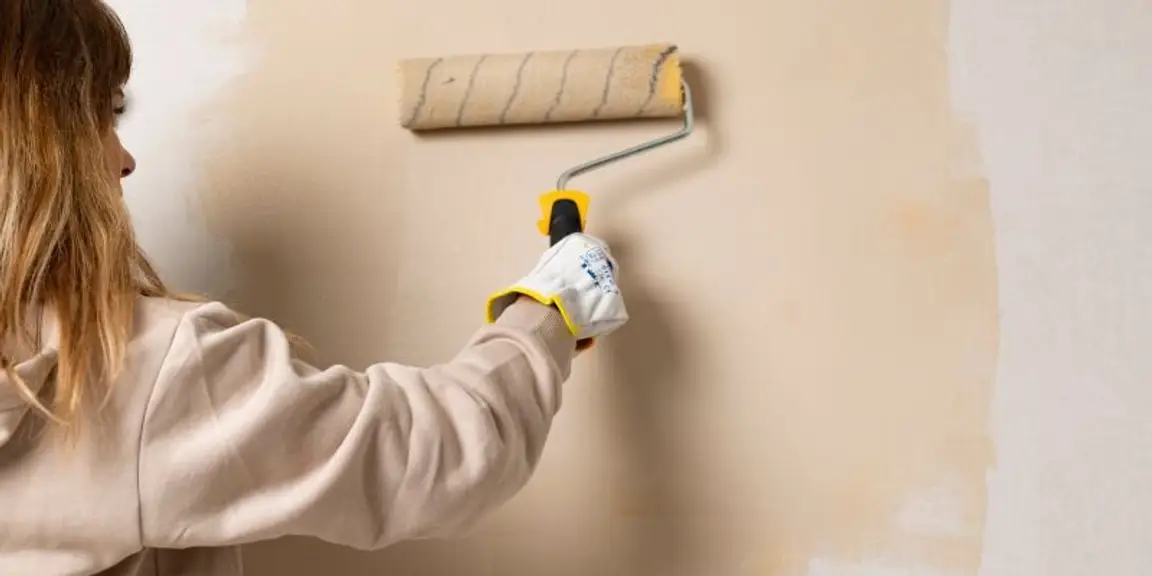


Ever watch someone walk through your house and see that exact moment when they start calculating paint costs in their head? That little pause at the scuffed hallway wall or the bright turquoise accent wall you loved five years ago tells you everything you need to know about first impressions.
Paint might seem like a small detail when you’re selling your house. But in Texas, where homes are selling for a median price of $343,779 and the average number of homes sold was up 0.7% year over year to 27,548, those small details can make the difference between a sale and no sale.
I’ve bought hundreds of houses across Texas, from fixer-uppers in East Austin to ranch homes outside San Antonio. Paint shows up in every single conversation, as buyers notice it, agents mention it, and appraisers factor it in.
Should you paint before selling? The answer isn’t always yes, but it’s yes more often than most sellers think.
What Does As-is Mean When Selling Your House in Texas
The overall statewide median price of $340,000 was unchanged from the same quarter last year, but that doesn’t mean every house gets the same treatment from buyers. As-is sales mean you’re handing over the keys exactly as they are today, with no repairs, no touch-ups, and no fresh coat of anything.
When you list a house as-is, you’re telling buyers they’ll handle everything after closing. Paint included. Going in, buyers know the score, which usually translates to lower offers that account for the work they’ll need to do.
Some homeowners think as-is means they can skip all the prep work and still get top dollar. That’s where reality hits hard. Texas buyers have choices right now. Active listings statewide increased by 30.5%, indicating your competition likely includes move-in-ready homes.
As-is works best when you’re dealing with major structural issues or inherited properties where extensive repairs don’t make financial sense. But if paint is your biggest problem, as-is might cost you more than a few gallons of primer and a weekend.
The Vargas family around Lubbock learned this last Tuesday. They watched two agent listings expire with zero offers on their four-bedroom ranch. The interior paint was dated, but the bones were solid. When they finally decided to sell directly to us, they realized paint was the main thing holding them back from a traditional sale.
Different Texas markets react differently to as-is properties. In Dallas-Fort Worth, where inventory moves faster, buyers might overlook paint issues if the location is prime. But in smaller markets like Beaumont or Tyler, where buyers have more time to be selective, worn paint can keep your house sitting empty for months.
The legal implications of as-is sales in Texas are straightforward but important. You’re still required to disclose known defects, even when selling as-is. Paint peeling due to water damage or lead paint in pre-1978 homes must be disclosed. But normal wear and outdated colors don’t trigger disclosure requirements.
Cash buyers like House Buying Girls see past cosmetic issues, but they price accordingly. As a company that we buy houses in Texas regardless of condition, they understand that convenience is often more important than making every repair. You’re trading convenience for equity, and sometimes that trade makes perfect sense.
Why Texas Homeowners Sell Houses As-is Without Repairs
In most Texas markets, buyers expect move-in-ready homes. Then life gets complicated, and timelines don’t cooperate.
Maybe you inherited a property three hours away. Maybe you’re relocating for work next month. Maybe the house needs $15,000 in updates, and you don’t have the cash to front the work. Sometimes, as-is isn’t a choice; it’s the only realistic option.
Texas homeowners face unique challenges. Our weather wears down exterior paint faster than in most states. Hail damage from spring storms creates insurance headaches that can delay traditional sales, and property taxes keep climbing, making holding costs expensive while you prep for sale.
I see patterns in why people choose as-is sales. Empty nesters downsizing to condos in The Woodlands would rather not manage contractors, divorcees splitting assets need quick closings, and landlords tired of dealing with problem tenants want out fast.
Average days on market fell to 61 days for traditional sales, but as-is cash sales can close in just two weeks. Sometimes speed trumps maximizing price.
Job transfers happen quickly in Texas cities like Houston and Dallas, where corporate headquarters continue to grow. You can’t always wait three months to make repairs and list with an agent. As-is sales solve timing problems that perfect houses can’t.
Financial stress drives many as-is decisions, too. Mortgage payments, maintenance expenses, and property taxes add up while you’re trying to coordinate repairs. Selling as-is stops the financial bleeding immediately.
Health issues often force as-is decisions. I’ve worked with elderly homeowners in Plano who couldn’t physically manage paint projects or coordinate contractors. Adult children living out of state don’t want to fly back and forth to oversee repairs. As-is sales eliminate the stress and logistics of long-distance property management.
Military families face unique pressures, too. PCS orders to Fort Hood or Lackland Air Force Base don’t wait for perfect market timing. When you have 30 days to relocate across the country, as-is sales provide certainty that traditional listings can’t match.
Estate sales present another common scenario. Heirs splitting inherited property in cities like Corpus Christi or El Paso often disagree about repair budgets, and even situations like selling a house with solar panels can complicate decisions about what improvements are worth paying for. Selling as-is avoids family conflicts over spending money on a house they’re not keeping.
How to Find Your Texas Home Value Before Selling As-is
Get this wrong and you’ll either leave money on the table or price yourself out of the market entirely.
Start with recent sales of similar homes in your neighborhood. Search for houses that sold in the last three months within a half-mile radius. Pay attention to the condition and any obvious repairs the sold homes needed. This gives you a baseline for what buyers are actually paying, not what sellers are hoping to get.
Online valuation tools like Redfin or Zillow provide starting points, but they can’t see your paint condition or feel the sticky front door that needs replacing. Use them as rough estimates, not gospel truth.
Talk to local real estate agents who know your area. Most will provide a comparative market analysis for free if they think you’re serious about selling. Ask them to run numbers for both the as-is condition and for basic improvements like painting. House-buying girls
House-buying girls and other cash buyers will also give you free estimates. These aren’t appraisals, but they reflect what investors will actually pay for houses in their current condition. Homeowners researching cash home buyers in Dallas often use these estimates to compare their options before committing to a sale. Sometimes that’s precisely what you need to know.
Austin-Round Rock-San Marcos homes had a median price of $440,000 despite a 2.2% dip, making it the most expensive market in the state. In contrast, smaller cities like Lubbock show different value dynamics where paint matters more to overall appeal.
Check county appraisal district websites for assessed values, but remember those lag behind market values and don’t reflect condition. Your 2026 assessed value might be based on 2025 sales data and assume your house is in average condition.
Property condition matters more to buyers in some price ranges than others. Starter home buyers under $200,000 expect to do some work. Buyers shopping for luxury homes above $500,000 want everything to be perfect.
Local market nuances affect valuation significantly. In energy-boom towns like Midland, where oil field workers need housing fast, as-is properties might command higher prices than expected. In college towns like College Station, rental investors often prefer as-is properties they can customize for student tenants.
School district boundaries create micro-markets within cities. A house needing paint in Plano ISD might still attract multiple offers, while the same house across the street in a different district sits longer. Understanding these boundaries helps you price appropriately for your specific location.
Seasonal factors also influence Texas valuation. Spring typically brings peak pricing as families want to move before school starts. Winter sales require deeper discounts, especially for houses needing work. Consider timing when setting your price expectations.
Best Paint Colors and Tips for Selling Your Texas Home Fast

What colors actually help houses sell faster in Texas?
Neutral and soft-greige interior colors are most frequently chosen. Warm whites, soft greiges, mushroom taupes, and pale sage greens consistently outperform bold or trend-of-the-moment colors in buyer-preference surveys and offer-price comparisons.
Stick with colors that work with Texas light. Our abundant sunshine can make cool whites look harsh, but warm whites feel welcoming. Greige works well because it’s neutral enough for any furniture but warmer than stark gray.
Avoid colors with strong emotional associations. NAR reports that orange, pink, purple, and other shades of the red family are most likely to turn off buyers. Red evokes anger, heat, and stop signs, and in a kitchen, it can tempt or invite excess.
The color of the front door has an outsized effect. Industry research has repeatedly found that homes with a black or charcoal front door can sell for approximately $6,000 more than those with a white front door. That’s a lot of return for a quart of paint.
Focus on high-impact areas first. Entry halls, main living spaces, and master bedrooms matter most. Guest bedrooms and utility rooms can wait if you’re working with a tight budget.
Sheen matters too. Flat paint hides imperfections but shows scuffs easily. Satin or eggshell finishes clean better and stand up to daily wear. Use semi-gloss on trim and doors for durability.
Quality paint costs more upfront but looks better and lasts longer. Cheap paint goes on thin and shows brush marks. Buyers notice the difference, even if they can’t explain why one house feels pricier than another.
Texas-specific color considerations include heat reflection and fade resistance. Lighter exterior colors reflect heat better, which buyers appreciate for energy efficiency. UV-resistant formulas prevent the rapid fading common in Texas sun exposure.
A professional application typically pays for itself with higher offers. DIY paint jobs frequently show roller marks, uneven coverage, and sloppy trim work. Buyers can spot amateur work immediately, and it undermines the fresh, well-maintained impression you’re trying to create.
You need to time your paint project carefully. Avoid painting during the Texas summer heat when the paint dries too quickly and leaves brush marks. Spring and fall offer ideal conditions for smooth application, delivering the professional look buyers expect. Interior painting can happen year-round but requires adequate ventilation in humid months.
Cash Buyers vs Real Estate Agents for As-Is Home Sales in Texas
Cash buyers don’t require perfect paint, but they price imperfections into their offers differently than traditional buyers using financing.
When you list with a real estate agent, you’re competing against other houses on the MLS. Buyers compare and shop. Paint condition becomes one of many factors they weigh when deciding which houses to see and how much to offer.
Cash buyers evaluate houses as investment opportunities. They calculate repair costs and factor them into purchase prices. A house needing $3,000 in paint might get an offer that’s $4,000-$5,000 lower to account for the work, time, and profit margin.
Agent sales in Texas typically take 45-60 days from listing to closing, while cash sales can close in 7-14 days. Sometimes speed is worth the price difference, especially if you’re facing foreclosure, divorce, or job relocation.
In Texas, real estate commissions run 5-6% of the sale price. On a $300,000 house, that’s $15,000 to $18,000 in fees. Cash buyers don’t pay commissions, but their offers reflect the convenience factor.
House Buying Girls works with homeowners who want quick closings without the hassle of repairs. If you’re curious about how House Buying Girls buys homes, they handle everything from title work to closing costs, making the process straightforward for sellers who don’t want to manage contractors and showing schedules.
Consider your situation honestly. If you have time and money to paint and prep, agent sales usually net more money. If you need to sell quickly or can’t handle the preparation work, cash buyers offer valuable alternatives.
Neither approach is inherently better. They solve different problems for different sellers.
You must weigh market conditions heavily in this decision. In seller’s markets, agents might push for repairs to maximize price. In buyer’s markets, cash offers provide a level of certainty that traditional sales can’t match. Current Texas inventory levels of 3.2 months suggest a balanced market where both approaches can work.
Financing complications make cash buyers even more attractive when you’re not in a hurry. Traditional buyers using FHA loans struggle with properties needing cosmetic work, as appraisers flag paint issues that can delay or kill the sale. Cash buyers eliminate all these variables.
How Fast Can You Sell an As-is House in Texas

Traditional sales timelines don’t apply when you’re selling as-is to cash buyers.
Most cash buyer companies can provide offers within 24 to 48 hours of seeing your property. Some use automated valuation models and satellite photos to make offers sight unseen, though in-person evaluations usually result in more accurate pricing.
Closing timelines depend on title work and your preferred schedule. All-cash purchases don’t require mortgage underwriting, which eliminates the biggest delay in traditional sales. Once you sign the contracts, title companies can usually close cash transactions in 5-10 business days.
With cash sales, you have more control over the timeline. Most cash buyers can accommodate fast closings if the title is clean and you need to close quickly. Need more time to find your next house? Many buyers will let you rent back for 30-60 days after closing.
Currently, the State of Texas has 2,711 properties in foreclosure and 173 REOs (real estate bank-owned). Foreclosure timelines create urgency that traditional sales can’t address. Cash buyers regularly close sales in days when you’re facing auction dates.
Compare this scenario to traditional sales, where buyers need mortgage approval, appraisals, and inspections. Even a good sale can fall apart when financing delays or low appraisals get in the way. Cash eliminates those variables.
Texas has efficient title processes compared to some states, but even traditional, smooth closings take at least 3-4 weeks. Cash buyers cut that timeline in half or more.
Texas Home Loan Options for As-is Property Buyers
Cash isn’t the only option for as-is sales, though it’s usually the simplest.
Some buyers use hard money loans or private lenders to purchase houses they plan to renovate. These loans close faster than traditional mortgages, but they’ll cost more in interest and fees. Buyers using hard money still need time for repairs before they can refinance or resell.
FHA 203k loans let buyers finance both the purchase and renovation costs in a single loan. The process requires a detailed contractor offer and inspections, which makes these sales more complicated for sellers. Expect several weeks to close versus a fraction of that for cash.
Conventional loans rarely work for houses needing extensive painting or other cosmetic updates. Lenders want properties in good condition, and paint problems signal potential maintenance issues that scare underwriters.
Investment buyers sometimes use portfolio lenders or local banks that keep loans in-house rather than sell them to Fannie Mae or Freddie Mac. These lenders have more flexibility regarding property condition, but they usually require larger down payments.
Frank Robinson faced this challenge when his father moved into assisted living near Garland. The house needed fresh paint throughout and had outdated wallpaper in the dining room. Traditional buyers kept asking for paint allowances that would have reduced his net proceeds more than selling as-is to a local investor who saw past the cosmetic issues.
Most as-is sales end up being cash transactions because financing adds complications that defeat the purpose of selling as-is. Buyers who need loans usually want move-in-ready homes.
Lenders vary their markets across Texas. Urban areas like Houston and Austin have more hard money lenders and private capital sources. Rural areas might have fewer financing options, making cash buyers more valuable for quick sales.
USDA loans serve rural Texas markets but require properties to meet strict condition standards. Paint problems that wouldn’t affect conventional loans can completely disqualify USDA financing, which makes as-is sales more common in rural counties where USDA loans are prevalent.
VA loans, common around military bases like Fort Sam Houston and Dyess Air Force Base, have specific paint requirements. Peeling paint or lead-based paint issues can halt VA-financed purchases. Veterans using VA loans need move-in-ready homes.
Frequently Asked Questions
Can I Sell My House Without Painting It in Texas?
Yes, you can sell without painting, but expect lower offers that reflect the paintwork buyers will need to do. Cash buyers and investors regularly purchase houses in their original condition. The key is pricing appropriately for the current state and understanding that cosmetic issues affect perceived value even when the house is structurally sound.
What Should I Not Fix Before Selling My House in Texas?
Skip expensive repairs like roof replacements, HVAC system overhauls, or foundation work unless they pose safety issues. Focus on high-impact, low-cost improvements such as painting, cleaning, and basic maintenance. Major structural repairs rarely return full value and can delay your sale while you coordinate contractors and permits.
What Is the Hardest Month to Sell a House in Texas?
December traditionally sees the slowest sales activity due to holidays and families avoiding moves during the school year. January and February can also be challenging as buyers wait for spring weather. However, less competition during the winter months sometimes benefits sellers who price appropriately and have compelling properties.
What Needs to Be Disclosed When Selling a House in Texas?
Texas requires sellers to complete a Seller’s Disclosure Notice covering structural problems, roof issues, plumbing or electrical defects, environmental hazards, and any insurance claims filed in the past five years. You must disclose known material defects that affect the property’s value, including foundation problems, flooding history, and major repairs. Paint condition doesn’t usually require disclosure unless it’s covering up damage or contains lead in pre-1978 homes.
If you’re thinking about selling your house in Texas and wondering whether paint is worth the investment, we’re here to help you think through your options. Whether you choose to paint and list traditionally or sell as-is for convenience, the right choice depends on your timeline, budget, and goals. If you still have questions about the process, read other FAQs here. No pressure, no obligation.
Helpful Texas Blog Articles
- Selling A Mold-Affected House In Texas
- Texas Earnest Money Rules
- How to Choose a Title Company in Texas
- How Much Do You Lose Selling a House As-Is in Texas
- How to Sell a Hoarder House in Texas
- Can You Sell a House for Less Than You Owe in Texas?
- How to Sell Your House With a Lien in Texas
- How to Sell Your Fire-Damaged House in Texas
- Selling Parents’ House After Death in Texas
- Texas Realtor Commission Rates For Selling Your Home
- What Do I Have To Disclose When Selling A House in Texas
- Can A Buyer Back Out After Inspection in Texas
- Sell A House With A Reverse Mortgage In Texas
- Selling A Condemned House In Texas
- Sell Your Flooded House Fast In Texas